Kōlam
I grew up in a Tamil household. Being the older child, it was my duty every morning to wipe all the doorsteps clean with a wet cloth and make kōlam patterns with dry rice flour on each doorstep. Something similar to what is shown in the video below, though not quite as elaborate.
Kōlam (meaning patterns or beautification) is not just an ancient artform, but also a vibrant living tradition in south India. Kōlam is mentioned in Tamil literature through the ages, going as far back as the Sangam era (300 BCE – 300 CE). Most south Indian households still draw simple kōlams on doorsteps and outside homes on a daily basis.
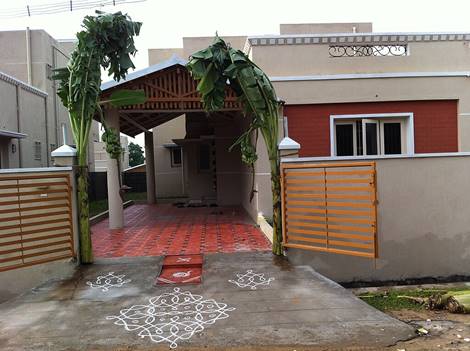
The kōlams in the picture above are called sikku-kōlam (loop kōlam). These can range from simple to highly intricate. Notice that all the loops in these kōlams are closed, with neither beginning nor end.
This is based on the idea that unbroken or continuous lines are auspicious, both locking in prosperity and keeping out negative energies. Here is another example of a sikku kōlam, drawn with a single uninterrupted line that ends where it began.
Lotus petals are also a common motif. The kōlam in the video below is called sahasradala padma (thousand-petalled lotus). Again, notice the absence of open-ended lines.
In addition to dry kōlams made of flour, there are wet kōlams made with rice paste, called ezhai kōlam or mā kōlam. These can be made on dry floors and will last longer once dry.
During certain parts of the year (especially around the Sankranti festive season), there are kōlam competitions. Women take part in these competitions by drawing intricate and creative kōlams outside their homes that are then judged by a neighborhood panel of judges and awarded prizes.
Here is a competition entry featuring a beautiful chariot, probably from somewhere in Andhra Pradesh, where kōlams are also called “muggulu.”
History of Floor and Wall Art in India
Kōlam is practiced widely and on a daily basis in south India, but similar traditions exist across the Indian subcontinent under different names.
Māndanā, chauk pūranā, alponā, aripan, aipan, jhoti-chita, pākhangbā, sāthiyā, muggulu – these are local-language names for an ancient kōlam-like tradition of home decoration through floor and wall art, primarily in red-and-white colors, practiced across the length and breadth of India right since ancient times.
To understand the background to these traditions, you have to understand the landscape of rural India – red soil rich in iron ore (ochre), dwellings primarily made of mud, and a dry climate for the best part of the year (in most parts of India, it only rains during the Monsoon season).
Mud houses are typically plastered to prevent the mud from drying out and crumbling or turning into loose dust. The plaster is made by mixing mud with cow dung, which acts as a natural binder, improving the plaster’s strength and durability. Cow dung is also known to have antimicrobial properties, which sterilizes the home and keeps insects away.
In village homes, a fresh plaster is typically applied once every week or so, and white designs are made on the freshly plastered floors and walls to beautify and brighten up the home, making it more pleasant to live in.
Historians have reason to believe that this tradition of floor and wall art goes back to prehistoric times.
In urban settings these days, fewer people follow these ancient practices as part of daily life (south India is an obvious exception). Instead, they are reserved for special occasions, such as festivals or religious ceremonies. In some cases, these household traditions have evolved to become folk arts.
Common Features of Floor Art Across India
Home decoration itself is not unique to India. But floor and wall art practiced by communities across the Indian subcontinent – even communities geographically far removed from each other – share too many features for it to be mere coincidence.
Closed Lines
Ancient Hindu texts (the Vedas, Tamil Sangam literature, the Purānas) all talk of “uninterrupted lines” as being auspicious, warding off negativity, and locking in well-being and prosperity.
Perhaps these lines were originally drawn around dwellings, as sacred borders that acted as charms to protect the inhabitants from dangers lurking outside (something like a “Lakshmana rekha”).
In order to be effective, such border lines had to be uninterrupted, without any breaks or gaps. Over time, the idea may have taken on a more metaphysical aspect, with designs that had no open-ended lines being considered auspicious and protective even if they were not enclosing the home.
Closed patterns, therefore, tend to be a common feature of traditional floor and wall art across the subcontinent. Of course, over time, traditions do get corrupted as people forget their origins.
Red and White Color Scheme
Another common feature of floor and wall art across India is their red-and-white color scheme.
Soil in most parts of India is rich in iron ore and, therefore, ochre tinted. So are mud huts and homes made using this soil. Limestone (chalk) is widely used as both plaster and to make designs on walls and floors, creating a naturally red-and-white color scheme. Turmeric and various other natural pigments may be used for variety, but the primary colors are white and ochre.
Even in non-rural settings, where houses are not made of mud, this ancient color scheme has been kept alive by giving it a religious meaning. For instance, white can symbolize peace, while red symbolizes prosperity. Another interpretation is that the combination of red and white symbolizes fertility (white symbolizing Lord Vishnu, and red symbolizing his wife, Goddess Lakshmi).
Similar Motifs
Apart from abstract geometric patterns (circles, squares, triangles, loops, mazes), religious symbols (lotuses, swastikas, conch shells, the footprints of Lakshmi and Vishnu), and nature (vines and tendrils, flowers, leaves, fishes, animals, birds) are commonly seen in floor and wall art across India.
Floor Art from Different Parts of India
Since I have already introduced kōlam and muggulu from south India, let me focus on the other parts of India in this section.
Māndanā
In Rajasthan and Madhya Pradesh in western and central India, floor and wall art is called “māndanā,” meaning “decorating,” and is typically made using a wet paste of limestone for white and ochre clay for red.
Chauk Pūrana
In Uttar Pradesh, Haryana, and Punjab, the tradition of decorating courtyards or pūja altars with white flour paste or dry flour on special or religious occasions is called “chauk pūranā” or “filling in a square.”
Alpanā, Alponā, Aripan, and Aipan
Alpanā, alponā, aripan, aipan – these may be corruptions of the Sanskrit word “ālimpanā,” meaning to plaster or paint. Another possibility is that they come from the word “āli” meaning “dyke,” thereby relating to the protectively encircling quality of such art.
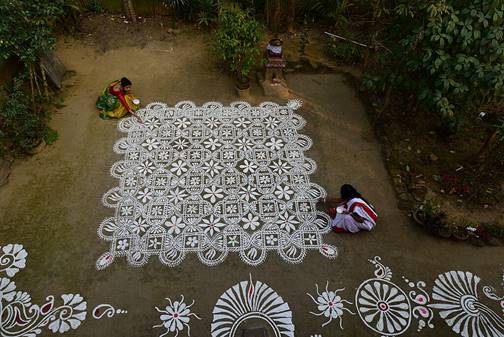
In West Bengal, Assam, Tripura, Uttarakhand, and Bihar, red and white alpanā are drawn on doorsteps, courtyards, walls, floors, and outside homes, especially on festive and special occasions.
Pākhangbā
Pākhangbā is a dragon or serpent deity in Sanamahism, the indigenous religion of Manipur in northeastern India. In ritualistic art, he is shown in a coil, with his tail in his mouth, forming a complete loop, representing the eternal cycle of life.
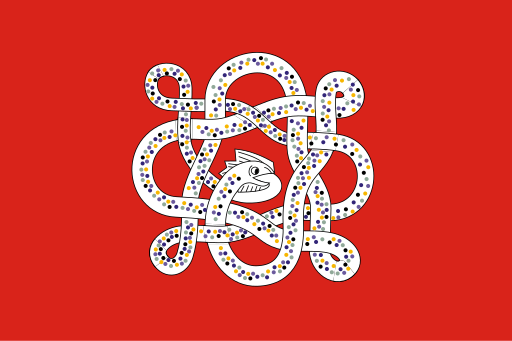
Pākhangbā is symbolically drawn on the floor using rice paste during Manipuri festivals and religious ceremonies.
Sāthiyā and Gahuli
Sāthiyā (aka Gahuli) are maze-like designs created using rice flour or unbroken rice grains as offerings during religious ceremonies. This tradition is practiced by both Jain and Hindu communities in Gujarat.
Rangoli, Pookalam, Vyūg
In some parts of India (Maharashtra, Karnataka), the word rangoli is used to refer to floor art similar to kōlam, māndanā, chauk pūranā, or alponā, but rangoli is typically more colorful floor art made using flowers or colored powders on special or celebratory occasions. The word “rangoli” comes from the Sanskrit word “ranga-valli,” meaning “colored vine.”
Other similar traditions are pookalam, colorful flower-petal patterns made on the floor during Onam celebrations in Kerala, and vyūg, an ancient Kashmiri Pandit wedding ritual of making colorful circular designs with colored flour or petals to welcome the bride and groom.
Buddhist Mandala Art
I can hardly end this article without mentioning Buddhist mandalas, even though the ritual purpose of creating floor art is quite different in Buddhism compared with Hinduism and Jainism, despite shared origins.
In both Hinduism and Jainism, ritualistic floor and wall art serve as charms to protect the home and bring prosperity.
In Buddhism, mandalas symbolize the world or the universe. They are painstakingly made as an exercise in meditation, and then ritually destroyed as an exercise in detachment.
India is a Cultural Continuum
India’s diversity is quite obvious, making some people question whether we are even a nation. But right under the surface lies a profound common thread of culture and tradition that weaves the subcontinent together.
This unity is no accident. The geography of the subcontinent, encircled in the north by the towering Himalayas and in the south by vast oceans, creates a self-contained space.
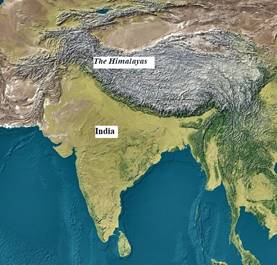
For millennia, people here have interacted with each other while remaining somewhat shielded from external influences, giving Indians a distinctive shared identity unmistakable to any outside observer.
Leave a Reply